Introduction
Dreams hold a mirror to our subconscious, offering intriguing glimpses into our inner worlds. Traditionally interpreted through cultural, psychological, and sometimes mystical lenses, dream analysis has evolved with technology. Artificial intelligence (AI) now offers a groundbreaking approach that personalizes insights, identifies patterns, and deepens our understanding.
The Evolution of Dream Interpretation Historically, dream analysis was a deeply subjective practice.
Ancient cultures viewed dreams as divine messages; Freud linked them to repressed desires. AI flips this narrative by introducing objectivity and personalization, harnessing data to craft nuanced interpretations that resonate with the individual dreamer.
How AI Enhances Dream Interpretation
Personalized Analysis
AI algorithms parse individual dream reports, factoring in the emotional and contextual nuances unique to the dreamer. This contrasts with broad, one-size-fits-all interpretations that often miss personal subtleties. AI achieves this by learning from large datasets, enabling it to offer insights tailored to your experiences and psychological landscape.
Practical Example
Imagine dreaming of being chased. A traditional interpretation might suggest anxiety or fear. An AI system, however, could analyze your past dreams and personal context, suggesting that the chase represents a pursuit of goals rather than mere fear, thus offering a more aligned interpretation.
Pattern Recognition
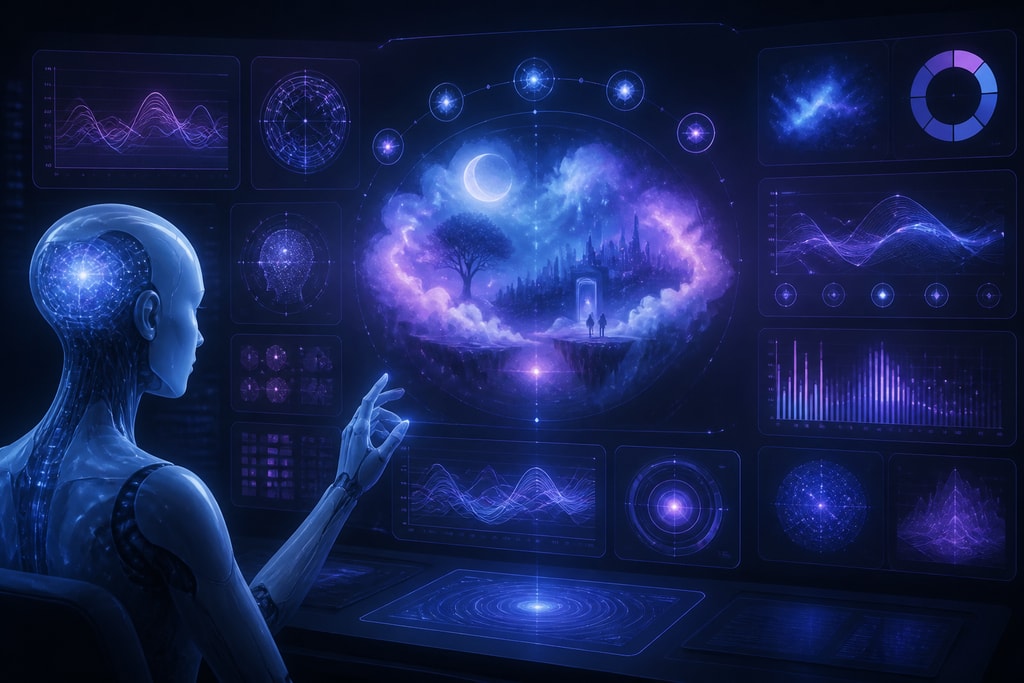
AI identifies recurring themes or symbols across numerous dreams, building a tapestry of insights over time. This pattern recognition is particularly beneficial for spotting subconscious trends related to stress, aspirations, or unresolved conflicts.
Decision Criteria Choosing the right
AI tool requires evaluating its pattern recognition capabilities. Look for tools that allow longitudinal analysis, enabling you to track emotional states or symbols over time.
Multimodal Frameworks
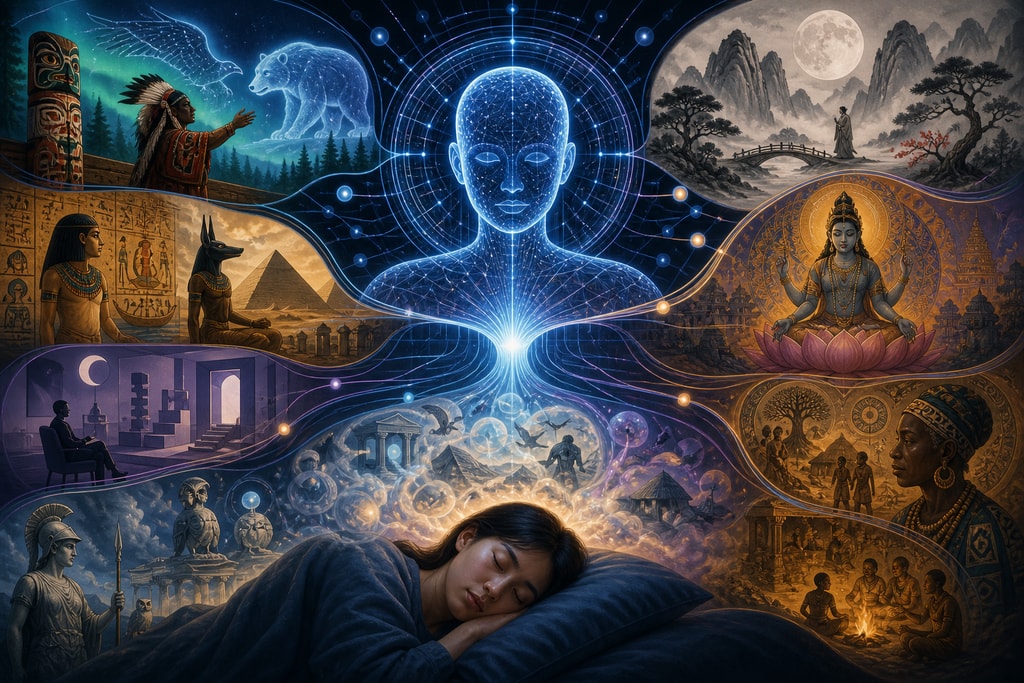
AI harnesses various cultural and psychological frameworks, integrating styles like Jungian analysis or cognitive science to provide multifaceted interpretations. This diversity respects the complex nature of dreams.
Internal Link: Explore the Dream Meanings Hub for deeper insights into symbols and their meanings.
Practical Applications of AI in Dream Analysis
Dream Journaling and Visualization
AI-enabled applications offer platforms for dream journaling, providing immediate interpretations and the ability to transform dreams into visual art. This visualization aids emotional processing and comprehension.
Mistakes to Avoid
Avoid over-reliance on AI outputs; balance them with personal reflection. Let AI guide your interpretations, not dictate them.
Mental Health Insights
By assessing the emotional tone of dreams, AI can signal mental health concerns like anxiety or depression, encouraging early intervention.
Cultural and Spiritual Perspectives
AI respects diverse spiritual and cultural interpretations, offering users a broader and more inclusive perspective on dream symbolism.
Limitations and Ethical Considerations

AI's objectivity is not flaw-proof. It depends on existing data, which may lack human emotional depth. Ethical concerns, like data privacy and over-reliance on technology for introspection, demand attention.
Topic-Specific Advice
Ensure any AI tool used complies with strict privacy standards. Exercise caution in providing personal data and routinely review the tool's privacy policies.
Checklist: Evaluating AI Dream Interpretation Tools
- Personalization: Does the tool reflect personal experiences and emotions?
- Pattern Recognition: Ability to track recurring dreams over time?
- Multimodal Analysis: Integration of diverse psychological and cultural frameworks?
- User Privacy: Adequate data protection measures?
- Ease of Use: User-friendly interface?
Frequently Asked Questions **Q: Can
AI accurately interpret all types of dreams? A: While AI provides insightful interpretations, its accuracy depends on the complexity and individuality of dreams. AI should be seen as a supplementary tool for reflection. Q: Are AI dream interpretation tools suitable for everyone? A: Not necessarily. Effectiveness varies based on personal beliefs and preferences. Some may find traditional methods or professional counseling more effective. Q: How do AI dream interpretation tools ensure user privacy? A: Renowned tools employ encryption and anonymization. Always review their privacy policies to ensure data protection. Q: What are the ethical concerns around AI in dream interpretation?** A: Main concerns include data privacy and the potential for over-reliance on algorithmic interpretations. Combine AI-driven insights with personal introspection for a balanced approach.
Conclusion
AI introduces a profound shift in dream interpretation, enhancing our understanding through personalized insights, pattern recognition, and rich frameworks. As technology evolves, leveraging AI for dream analysis needs a balanced blend of technology and human insight. Discover AI-powered tools and a community focused on dream exploration using Dreamscape, a platform designed to deepen your journey into self-discovery through dreams.
Sources and Further Reading
- The Uses of AI for Interpreting Dreams | Psychology Today
- AI Dream Interpretation: Can an Algorithm Understand Your Unconscious? | Individuate.Me
- What Do My Dreams Mean? AI Dream Interpretation Guide | Dreamz Journal
- Dream Journal Apps With AI Interpretation: Buyer's Guide | Individuate.Me
- DreamStream: How AI Dream Interpretation Actually Works