
Dreams have captivated human imagination for centuries. They inspire art, literature, and conversations that dive deep into the subconscious. Yet, they're also the root of many myths., with advanced insights in psychology and neuroscience, it's crucial to debunk common dream myths lingering in popular culture.
The Myth of Dream Predictions
Dreams predicting the future is a long-standing belief. However, scientific investigations suggest dreams are reflections of our subconscious—mere echoes of our thoughts and experiences. American Psychological Association corroborates this, noting dreams help process emotions and situations, aiding emotional reconciliation.
The Illusion of Predictive Dreams
Dreams occasionally feel prophetic because they capture our anxieties and aspirations. Our brains construct narratives that relate to our realities, leading to situations where dream content aligns closely with real-life events.
Practical Example: A Promotion Dream
Imagine dreaming of a job promotion after a stressful work week. Instead of foreshadowing, this dream mirrors your desires and concerns, possibly prompting you to prepare better.
Mistakes to Avoid with Predictive Dreams
- Ignoring Recurrent Themes: Sometimes, repetitive dreams reflect unresolved issues.
- Over-relying on Dream Predictions: Use dreams for reflection, not as foresight.
Recurring Dreams and Their Meaning
The myth around recurring dreams is their role as harbingers. While they can indicate stress or unresolved conflicts, they don't convey mystical warnings. According to Dreamscape's Dream Meanings Hub, recurring dreams serve as introspective tools.
Navigating Recurring Dreams
- Identify Patterns: Notice recurring themes or emotions.
- Reflect on Life Circumstances: Connect these patterns with current life stressors.
- Journal and Analyze: Document your dreams using platforms such as Dreamscape for interpretations.
Practical Example: Recurring Falling Dreams
These might point to feelings of insecurity or loss of control. Analyze personal and professional pressures adding to this theme.
Topic-Specific Advice
- Track Frequency: Keep a dream journal to identify new or ceasing patterns.
- Seek External Help: If recurring dreams affect your mental health, consult a professional.
Dream Symbols: Universal Meanings?
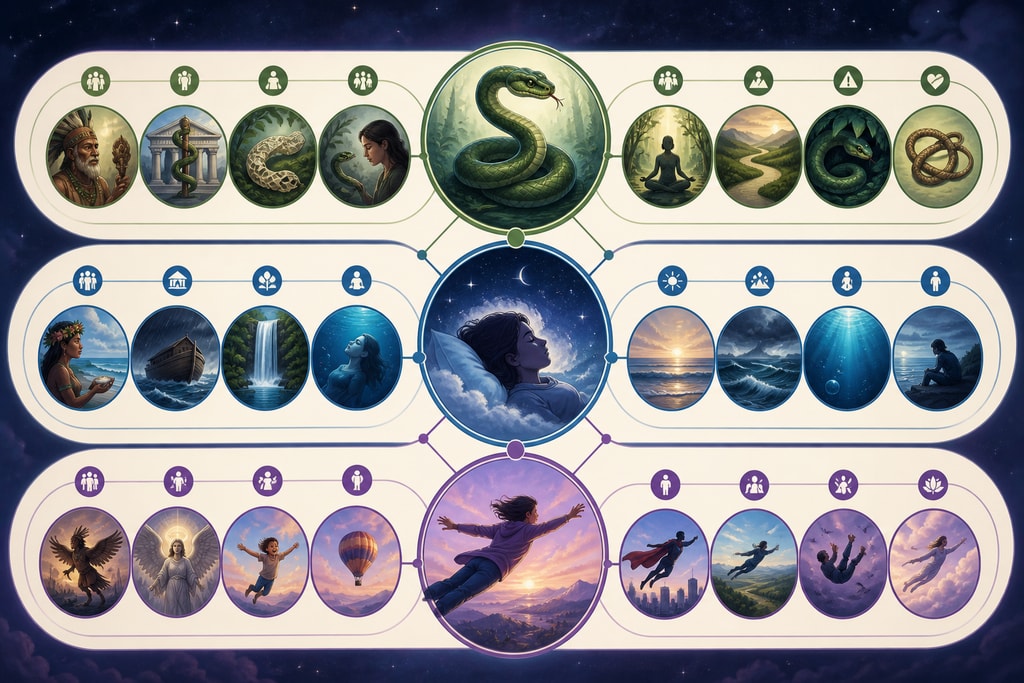
There's a pervasive idea that dream symbols have universal meanings. However, the truth is that symbolism in dreams is personal and subjective. Cultural context, past experiences, and emotions influence these meanings. For instance, while some might see a snake as fear-inducing, others might see it as a symbol of transformation.
Interpreting Dream Symbols
- Personal Context: Reflect on personal associations with symbols.
- Cultural Influences: Acknowledge cultural meanings affecting interpretations.
- Utilize Resources: Refer to Dreamscape's Dream Meanings Hub for detailed guides.
Practical Example: Water in Dreams
While one person might find water soothing, culturally, it might symbolize cleansing or change.
The Impact of External Stimuli
The belief that external stimuli, such as sounds and physical sensations during sleep, shape dreams is partly true. Research indicates that environmental sounds can fold into our dream stories, highlighting our mind's responsiveness.
Decision Criteria: Considering External Stimuli
- Sound vs. Silence: Understand personal preferences for ambient noise during sleep.
- Physical Comfort: Adjust sleeping conditions for optimal sleep quality.
Mistakes to Avoid
- Ignoring Sleep Environment: Overlooking the impact of sleep setting on dream content.
Common Dream Myths Checklist

| Myth | Truth | |——|——-| | Dreams predict the future | Dreams reflect current subconscious thoughts | | Recurring dreams are warnings | They highlight ongoing stresses or conflicts | | Symbols have universal meanings | Meanings are subjective and personal | | External stimuli influence dreams | This can happen but depends on timing and context |
FAQ on Dream Myths
Can dreams predict the future?
Dreams more likely reflect current emotions and thoughts than predict future events.
Do animals dream like humans?
Yes, studies suggest that many animals experience dream-like states, as observed in their brain activity during sleep cycles.
Is dream control possible?
Lucid dreaming is where some control can be exercised with intentional practice.
How can I remember my dreams better?
- Maintain a Sleep Routine: Consistency aids dream recall.
- Dream Journaling: Document dreams immediately upon waking.
- Mindfulness Practices: Enhance awareness and recall.
Sources and Further Reading
- American Psychological Association
- Dream Meanings Hub
- Scientific American
- Harvard Medical School
- Insights into sleep quality and dreams.
- Neuroscience News
- Latest in dream research and brain function. Understanding these myths enriches our appreciation of dreams. Whether you're wandering through interpretations or curious about subconscious narratives, Dreamscape provides tools and insights. Start your dream exploration journey by visiting the Dream Meanings Hub and downloading the Dreamscape app today.