Introduction
As artificial intelligence (AI) reshapes countless industries, its application in dream research is particularly compelling. By, AI's integration into dream interpretation and analysis will revolutionize our understanding of the subconscious. Leveraging its capability to process vast datasets and recognize complex patterns, AI provides invaluable insights into the enigmatic world of dreams.
The Role of AI in Dream Interpretation
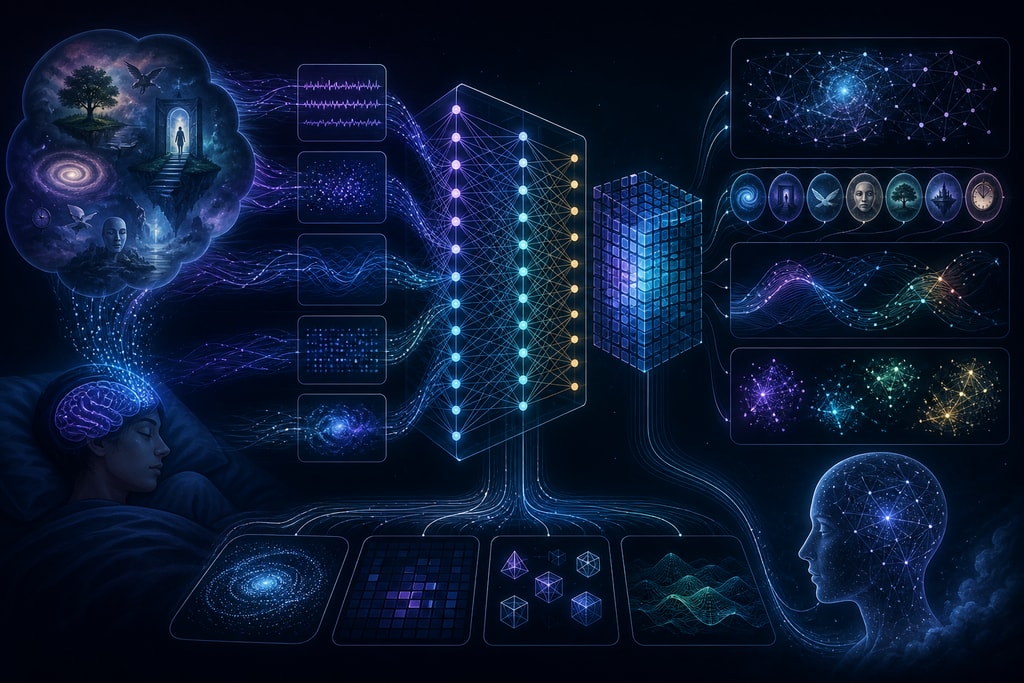
AI's significant potential in dream research stems from its ability to analyze intricate data sets, identifying recurring themes, symbols, and emotions. This not only enhances interpretation accuracy but also allows for more personalized insights for users.
Enhancing Dream Symbol Analysis
A critical advancement is AI’s ability to scrutinize dream symbols. By examining extensive databases of dream reports, AI discerns common themes and meanings, offering deeper, personalized understandings of dreams. For example, a recurring motif in dreams could reflect underlying emotional states or concerns, which AI can highlight more accurately than traditional methods.
Current AI Tools in Dream Research
Several AI-powered tools are already impacting dream interpretation and documentation. Platforms like Dreamscape utilize AI to offer customized insights based on dream content and emotional context.
- Dream Autolog: An app for recording and analyzing personal dream data using AI algorithms to correlate symbols and emotions.
- SymbolSolver: This tool uses AI to match dream symbols with potential life events or psychological states. Explore more on Dreamscape’s AI capabilities.
The Future Possibilities of AI in Dream Research
AI advancements promise to expand our exploration of the subconscious, with concepts once thought futuristic becoming possible.
Predictive Dream Analysis
Soon, predictive analytics might enable AI to foresee potential dream themes. By analyzing psychological profiles and past dream patterns, AI tools could provide cues about forthcoming dream symbols.
Real-time Dream Visualization
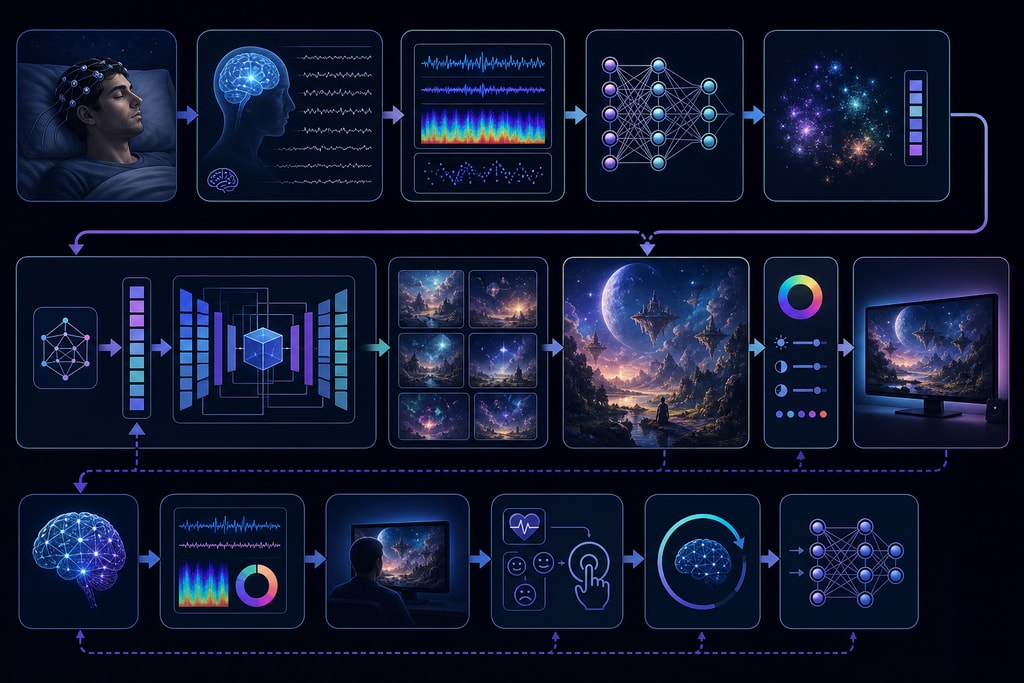
AI’s strides in visual processing might soon facilitate real-time visual renditions of dreams. This could offer groundbreaking insights into an individual's subconscious, akin to a personalized film that reveals underlying thoughts and emotions.
- Practical Example: Imagine wearing a headband that uses AI to project dream scenes onto a screen, helping both dreamers and therapists uncover deeper insights.
Integration with Sleep Technology
AI extends beyond post-dream analysis by integrating with sleep-monitoring tech, enhancing understanding of how various sleep stages affect dream patterns and recall.
Real-world Application
- DreamWatch: A sleep monitoring device that provides feedback on dream quality and informs users about sleep stages impacting their dreams.
Checklist for Choosing AI Dream Tools
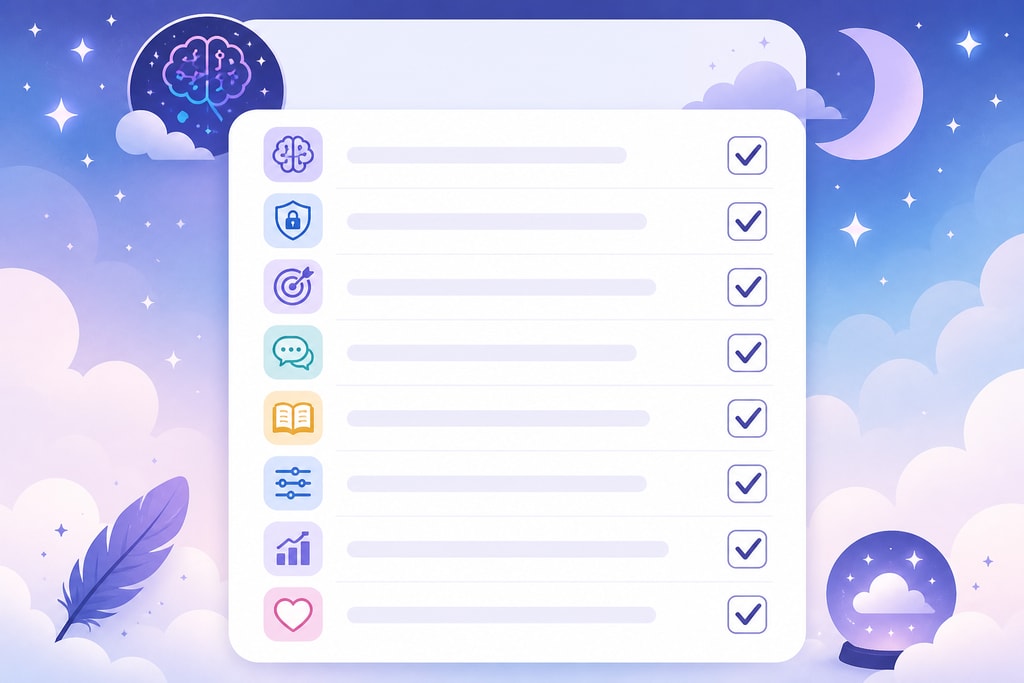
When selecting an AI-powered dream tool, consider these critical factors:
- Accuracy: Choose tools backed by scientific research for reliable interpretations.
- User Interface: Opt for intuitive and user-friendly designs.
- Privacy Measures: Ensure compliance with stringent data protection standards.
- Customization: Seek platforms that offer personalized advice based on detailed dream histories.
Ethical Considerations
AI in dream research raises ethical issues needing careful management — primarily around privacy, data security, and potential misinterpretations.
- Data Privacy: Ensure that AI platforms protect user data with encryption and transparent policies.
- Bias Mitigation: Address potential biases in AI algorithms to prevent skewed interpretations.
Common Mistakes to Avoid
- Over-reliance on AI: Don't disregard human analysis when interpreting dream data.
- Ignoring User Experience: Over-complex interfaces can deter users from utilizing AI tools effectively.
FAQs
How does
AI improve dream recall? AI can identify recurring patterns and themes within dreams, which, when understood, boost users' ability to recall dreams more vividly and accurately.
Is AI replacing traditional dream interpretation?
AI complements rather than replaces human interpretation, offering data-driven insights while human interpreters provide nuanced understanding.
What privacy concerns are associated with AI in dream research?
Using AI for dream interpretation involves handling sensitive personal data, necessitating stringent data protection measures to safeguard privacy.
Conclusions
The incorporation of AI into dream research heralds a promising era, brimming with opportunities to probe the subconscious mind like never before. Whether you're a dream enthusiast or a psychologist, these advancements ensure rich, exciting prospects. For those keen on exploring their dream world further, the Dreamscape app is an excellent platform to discover these AI-driven insights.
Related Links
- Dream meanings hub: Expand your understanding of dream symbols and meanings.
- Dreamscape homepage: Download the app and start exploring your dreams today.
Sources and Further Reading
- The Role of AI in Understanding Dreams
- Ethical Challenges in AI Dream Analysis
- Artificial Intelligence and Dreams, Example Publisher
CTA
Venture into the world of dreams with AI-generated insights. Download Dreamscape today and embark on your journey.